Why Your Event Modeling Workshop Didn't Stick
Event Modeling doesn't fail in isolation. It fails at the breaks in your value chain.
After facilitating so many Event Modeling workshops and consulting on dozens of software projects, I discovered a simple pattern that kills project success every single time. It shows up in almost all workshops I give.. I call it “The Wall.” And once you see it, you’ll recognize it everywhere - in your meetings, your projects, even in your personal goals. I even learned to embrace it, when it shows up… it´s a good sign!
The crazy part? Most teams hit the Wall and don’t even realize they’re building their own prison.
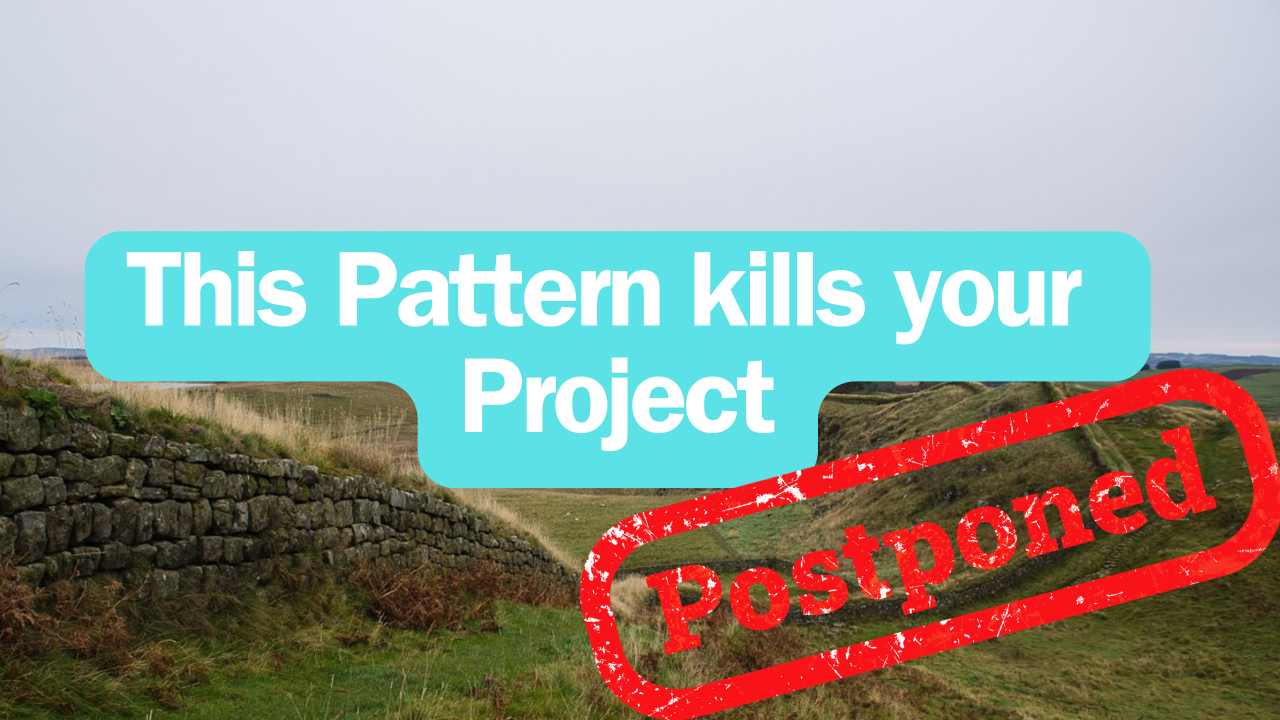
Last week in a workshop, I watched it happen again.
The energy in the room suddenly shifted. It happens fast. We’d been making great progress for the first half of the day, then suddenly - silence. People started checking their phones. Someone shifted uncomfortably in their chair.
I knew what was about to come. The line I’ve heard a hundred times:
“We don’t think we have the right people in the workshop to answer those questions. We should postpone them to next week.”
There it was. We still had 4 hours left on the clock.
I didn’t slow down. Someone even said, “Funny.. Martin is the most enthusiastic one in the room.” They were right. But not because I’m naturally more energetic.
Because I knew something they didn’t yet: We just hit the Wall.
The Wall shows up in every project. Every workshop. Every meeting where real progress is possible.
It’s that moment when initial euphoria dies down and you hit hard questions. The ones not easily answered. Real decisions. Uncomfortable unknowns. The moment when the circling starts. The energy drains. Progress feels like it stopped 30 minutes ago.
Then a second person suggests the same solution: “Let’s postpone this. Let´s talk about implementation”.. Not so fast..
Here’s what most people don’t understand: The Wall isn’t a problem. It’s proof of progress.
You have to move quite a bit forward to hit a wall. You can’t hit an obstacle unless you’ve actually traveled there first. The Wall only appears when you’re doing real work - when you’re past the easy stuff and into territory that actually matters.
It took me many workshops to recognize this as a repeated pattern. Every. Single. Time. Different teams, different industries, different problems - the same Wall.
Once I named the Wall, I saw its root cause everywhere: postponerism.
“I’ll tackle this next week.”
“Let’s have another meeting about this.”
“We don’t have the right people here.”
“I’ll do it tomorrow.”
In most meetings, when things get difficult, someone suggests another meeting. My response?
“Why would we have another meeting? We ARE the meeting right now. Why don’t we discuss it right away?”
Because here’s the truth: postponerism is the arch enemy of progress. Every time we choose comfort over the hard conversation, we’re adding another row of bricks to the Wall. It´s getting higher. We’re making it harder to break through next time.
This isn’t a technical problem. This isn’t about unclear requirements or bad architecture. Those are symptoms. The real pattern that kills projects is that people stop when they hit discomfort.
I know how to break it. It works every time.
When someone says “we need the right people here,” I ask a simple question:
“If we postpone to next week, who are the persons you will invite that are not available today?” or just a variation “If we postpone to next week, what additional information will be available that is not available right now?”
More people start to shift uncomfortably in their chairs. Usually, we get 1-2 names of “Experts”, we would need to tackle the Wall.
Then I ask: “Where are they today? Can they join?”
Sometimes the answer is yes - and the “missing expert” is literally down the hall at lunch. Sometimes the answer is no.
To break the wall, either is fine.
Because what we do with Event Modeling is enable options and next steps. We can make assumptions. We can model the flow as we think it could be. When the expert joins later, that assumption becomes something to validate. Either they say “you nailed it” or “no, it has to be like this.”
Either way - the Wall starts to break.
Exactly this happened last week.. the expert couldn´t join, but we just moved on with some assumptions we´ve made.. It´s either a “hell, yes!” or a “hell, no!” when the expert joins in the next meeting.
By the end of the modeling process, we will have a flow that everyone agrees on. We’ll break the Wall step by step, stone by stone. It´s almost inevitable…
The first model might not be perfect. The expert might change everything later. That’s fine. That’s what modeling is FOR - having deep discussions with the right people and tackling the questions people love to postpone..
It´s easy. Just don´t stop before the Wall.
When people insist on postponing, I redirect their energy: People subconciously hope they can escape the uncomfortable hard work by postponing it. By reframing it as “preparation”, we keep going.
“If we postpone the discussion, can we use the rest of THIS meeting to prepare the NEXT meeting?”
You can always make one more step. You can always masquerade postponement as “preparation.” If we’re going to wait anyway, let’s use the time we have now to make that future meeting actually productive.
Oftentimes that´s enough to open the first cracks in the Wall.
The Wall shows up everywhere - not just in workshops.
In your business planning. In your team meetings. In your personal goals. In every software project that runs over budget or misses deadlines.
Every time you choose “let’s discuss this next week” over “let’s solve this right now,” you’re feeding postponerism. You’re choosing comfort over progress.
The technical problems aren’t the root cause. Bad architecture and unclear requirements are symptoms. The real pattern that prevents project success is that people stop when they hit discomfort. Staying vague, moving decisions…
They genuinely believe they’re being reasonable. They think “let’s get the right people” is smart project management. They don’t realize they’re standing in front of the Wall, choosing to walk away instead of breaking through.
When you hit the Wall, you have two options:
Option 1: Postpone and wait (comfort now, chaos later)
Option 2: Press forward and break it (discomfort now, clarity forever)
Most people choose option one. Most projects fail because of option one.
But here’s what I’ve learned after running all those workshops and consulting on all those projects:
We are the meeting right now. We have the people we need. We can make assumptions and validate them later. The only thing stopping us is our own unwillingness to be uncomfortable for the next hour.
There is always something we can do now. The Wall isn’t blocking your path. Your postponerism is.
Next time you’re in a meeting and someone suggests “let’s discuss this next week,” ask yourself:
Who exactly are we missing? Are they available right now? What assumptions could we make and validate later? Are we avoiding discomfort or genuinely waiting for something?
Because progress isn’t made in the easy moments. It’s made when you hit the Wall and choose to break through instead of building it higher.
The pattern is simple. Once you see it, you can’t unsee it. Postpone or break?
If your team keeps hitting walls and choosing postponement over progress, I can help.
I’ve spent years learning how to recognize the Wall the moment it appears - and more importantly, how to break through it. I know the questions to ask, the moves to make, and how to turn “let’s postpone this” into actual momentum.
Want someone who knows how to break walls in your next project?
Book a free Call.. let´s find where your wall is.
https://outlook.office365.com/book/NebulitGmbH@nebulit.de/s/SchaAYI1q02_E0rbpW5Xhw2?ismsaljsauthenabled=true
My book “Understanding Eventsourcing” gives you the blueprint. But reading alone will take your team too long.
I can teach your team how to build these blueprints faster and skip the whole trial-and-error phase. Let’s have a chat about how this applies to your project.
Follow the Online Course “Implementing Eventsourcing” - comes with a Lifetime Event Modeling Toolkit License.