It took me ages to understand what it really means to work with event sourcing and CQRS.
I came from the state-based world, like most of us did - tables, relations, Object Mappers. Event Sourcing seems like just a small change. Just switch the persistence scheme. But the mental impact? Massive.
The Inevitable Complexity Spiral
Any system built on state alone is doomed to grow in complexity over time - unless you heavily invest in fighting it.
Adding features means adding columns. Adding columns means touching things that already work. Side effects guaranteed.
The Point of No Return
Eventually, you reach a level where new features don’t fit the architecture anymore. You’d have to restructure your table schema - but in state-based systems, that comes with high cost. Restructuring is crazy expensive, so you typically can’t do it.
Restructuring in a grown systems means, table migrations and high risk.
You’re left with one option: add nullable columns and squeeze it in somehow.
The Real Cost: Mental Tax
Let’s say you have a customers table. Now you need to add tax numbers because you’re targeting businesses - which wasn’t the original plan.
Since private customers don’t have tax numbers, you keep it the same table, but make the tax information nullable. Now, every time you work with a customer, you have to deal with nullable columns. Or you map them by “discriminator” to an object hierarchy using something like Hibernate - hiding what’s really going on.
Crazy complex for a simple thing.
The Compound Effect
It’s mental tax. The more of these “subtleties” you have, the more expensive it gets. At some point, you will miss something - resulting in bad bugs. The more you squeeze features, the more bugs come out of your system.
The Alternative - Just Another Event
In an event-sourced system? It’s could be just another event - “CompanyInfoAttached.”
You now have a customer AND an attached tax number. You can work with this information.
The Key Difference: Flexibility
If you badly want, you can still project this information into the same customers table with the nullable column. But chances are - you might want to do it differently, and now you can.
You can have:
- A
customersprojection - A
business_customersprojection - A
tax_informationprojection
You have the flexibility to change and adapt your system. That’s the key.
Real World Example: Adding Licensing to a SaaS
The Requirement
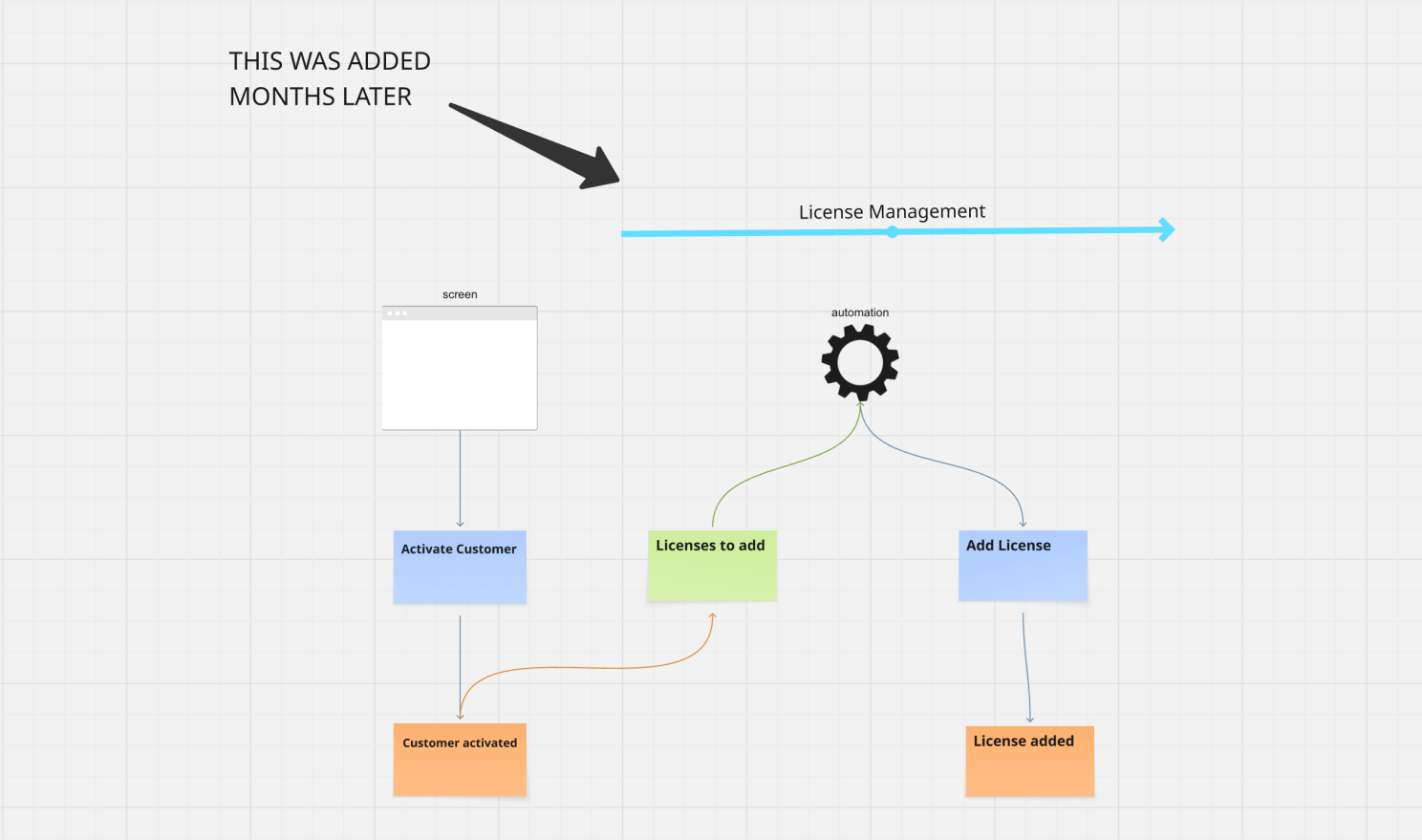
For a SaaS application, we needed to build a licensing system. Adding users would trigger license fees. This was added much later in the project.
The Solution
We just reacted to “User Activated” (which already existed), which resulted in “License Added”, which triggered the whole licensing (re-)calculation.
We didn’t have to touch any of the existing, working things. We just added new slices - that’s all.
100% Confidence
We had 100% confidence because we saw the impact of this feature already from the event model - no surprises.
We sat down with the business expert: “Tell me, how should this work?” We added a few slices, some new automations. In the end, it was super simple - including the payment integration.
The Architecture in Practice - It Works
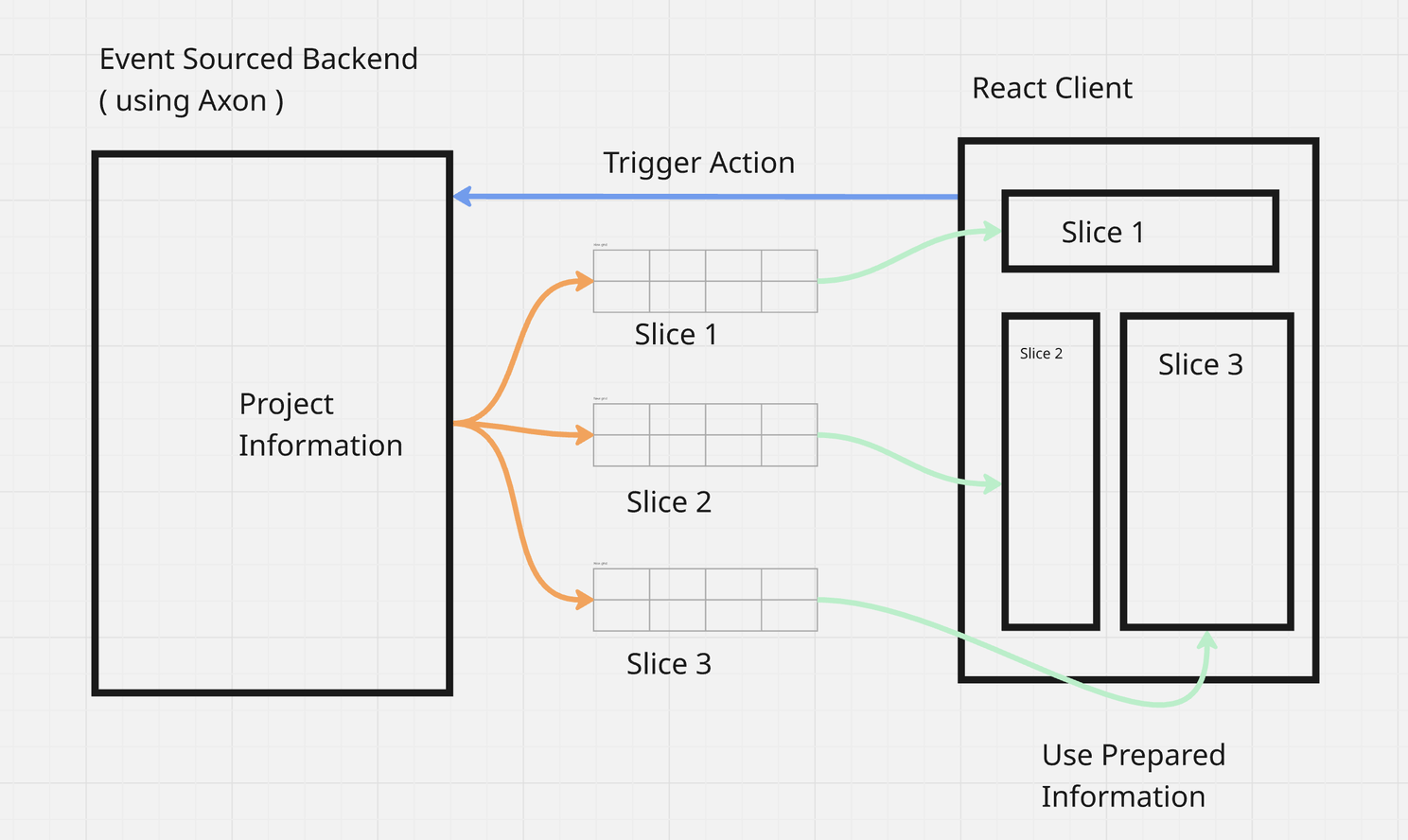
The neat thing: we used Supabase for projections. The client “only” saw tables and never knew about the event-sourced backend. We basically built two systems.
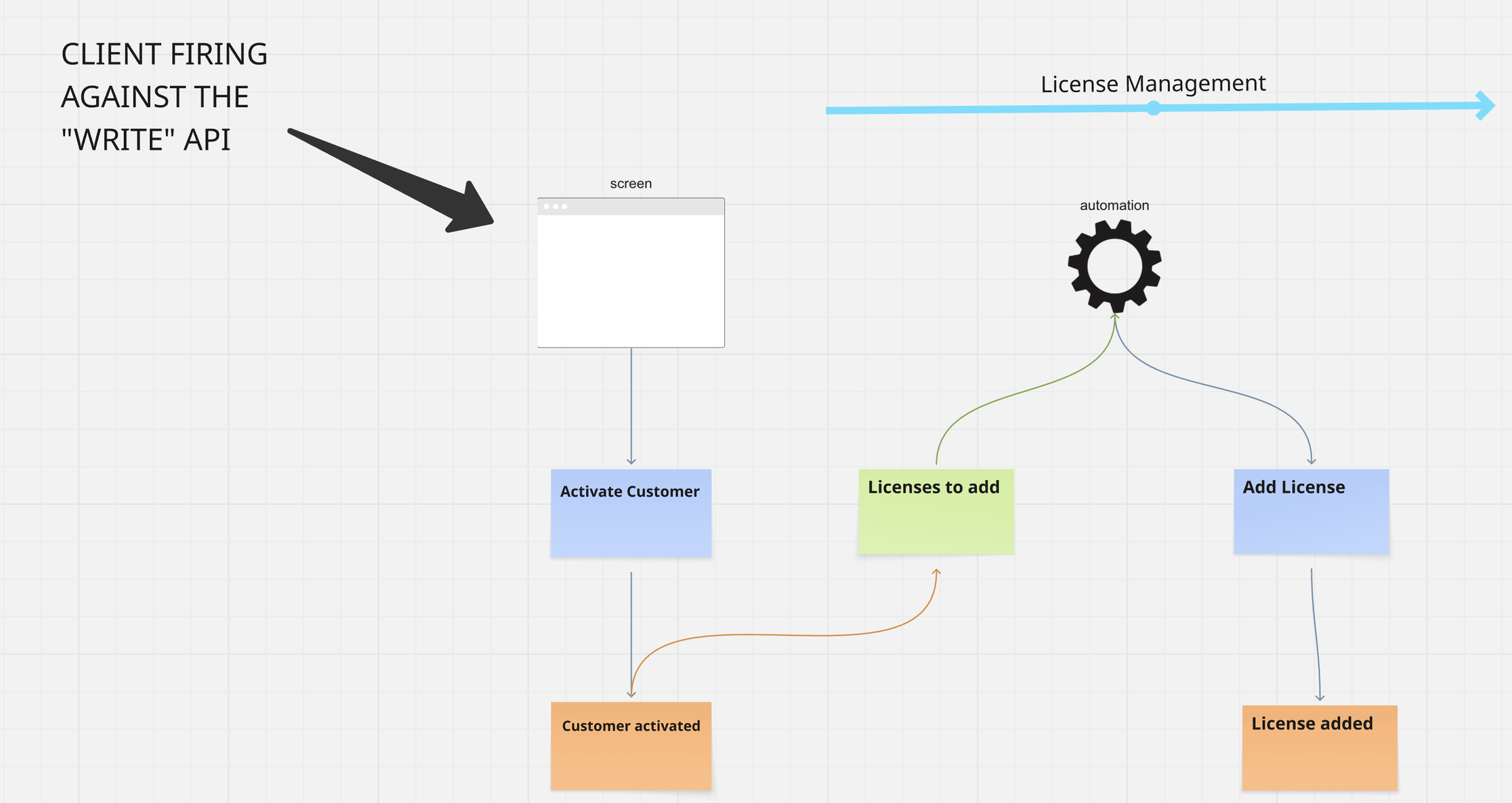
The client fired requests against the backend API, changing the system. New Events resulted in updated table projections. There was no need to make the client aware of the “events” - it had all it needed. And we could leverage all the benefits like row-level security out of the box.
Why Direct Table Access?
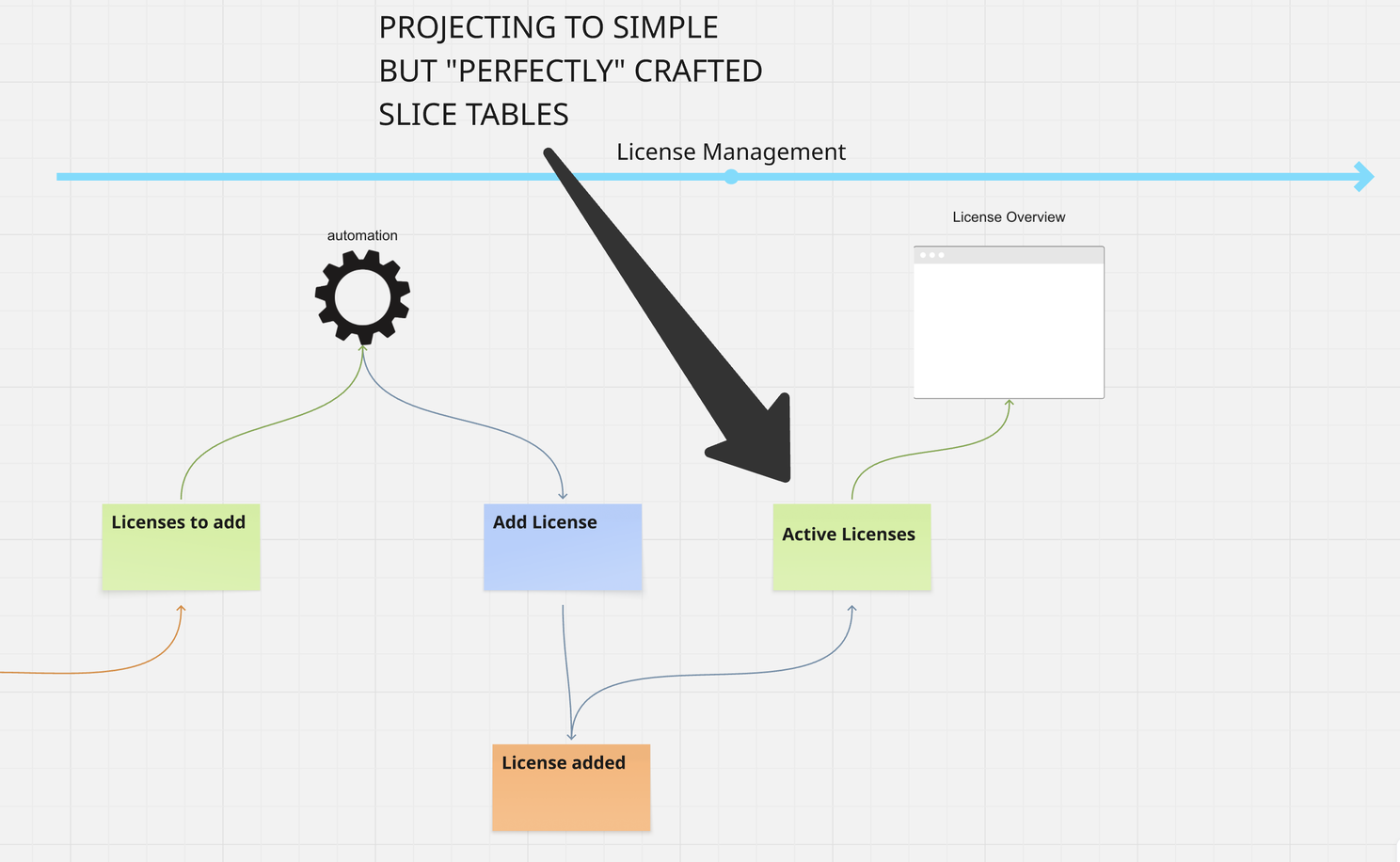
We first provided an API for the client, “wrapping” Supabase, but then we realized - why not just use the tables directly? They are perfectly crafted for every use case anyway.
Using Event Sourcing, you don’t work with generic tables. There are no joins typically. Each slice has the “perfect” table for exactly this use case, with exactly the data it needs. (of course you can make exceptions to that rule, I had a good discussion with Alexander Miertsch about that recently here on LinkedIn)
That’s why we chose to go for tables directly from the client - the data is already prepared, so building the client is super simple. You just use the prepared information.
The Real Benefit: An Architecture That Works
This is CQRS in action. Essentially it’s 2 systems - loosely coupled.
Plan Ahead with Confidence
We can plan the system ahead, build it, and add functionality - the architecture works.
You can model the whole system upfront. I’m typically pretty confident in what we model since we involve everybody from the start.
Maintain Without Fear
You can maintain systems over months and years - since you only add new features and typically rarely touch existing ones. When we need to “modify” something, we treat it as “adding new” - we replace slices. We don’t adjust existing slices - we delete them and regenerate them.
In the beginning, we provided this “backend” API to provide the client with Read-Access.. when we later decided to skip that - we had to replace some Live-Projections (reading directly from the Event Stream) with Database-Projections. It was easily done - just delete the slices and regenerate them from the Event Model.
The Problem You’re Facing
If you’re stuck in the state-based trap - watching complexity spiral, scared to add features, drowning in mental tax from nullable columns and discriminators - you are stuck where everybody is stuck.
And your next feature might break something that works.
What to do now
What you want is..
Being able to add new features without touching existing code. Plan systems with confidence before writing a line. See exactly what will break - before it does.
✅ Model-first approach — Business and dev working together, aligned visually, not playing telephone
✅ Predictable delivery — The number of modelled slices give you a GREAT and accurate idea of how big a new feature is.
✅ Changes welcome — Embrace change - it’ll come anyways. Using the slice-based approach, change is welcome. You can stay flexible and adaptive.
✅ Code Generation — You can leverage AI and Code Generation (+ generate running specifications directly from your models). Your team can work this way too.
This Skill is learnable - I can help. And I take care of one more thing:
✅ Train an Internal champion — Someone on your team who can drive this independently, facilitate workshops and help grow your Teams.
Only 2 Spots available in November 2025 → Book your Discovery Call now - I can give you some details
Ready to Learn More?
My book “Understanding Eventsourcing” gives you the blueprint. But reading alone will take your team too long.
I can teach your team how to build these blueprints faster and skip the whole trial-and-error phase. Let’s have a chat about how this applies to your project.
Want to learn how to apply Event Modeling and Event Sourcing in practice?
Follow the Online Course “Implementing Eventsourcing” - comes with a Lifetime Event Modeling Toolkit License.